
Botox for TMJ in New Berlin, WI Jaw Pain & Teeth Grinding Relief
Botox for TMJ uses FDA-approved neurotoxin injections to relax the masseter and surrounding jaw muscles — reducing the force behind teeth grinding, jaw clenching, and the chronic pain, tension headaches, and soreness that TMJ disorder causes. At A-Class Aesthetics in New Berlin, all therapeutic injectable treatments are performed by our RN nurse injectors under the medical oversight of Dr. Dave Christianson, Medical Director. Serving patients from Milwaukee, Brookfield, Waukesha, and surrounding Southeast Wisconsin.
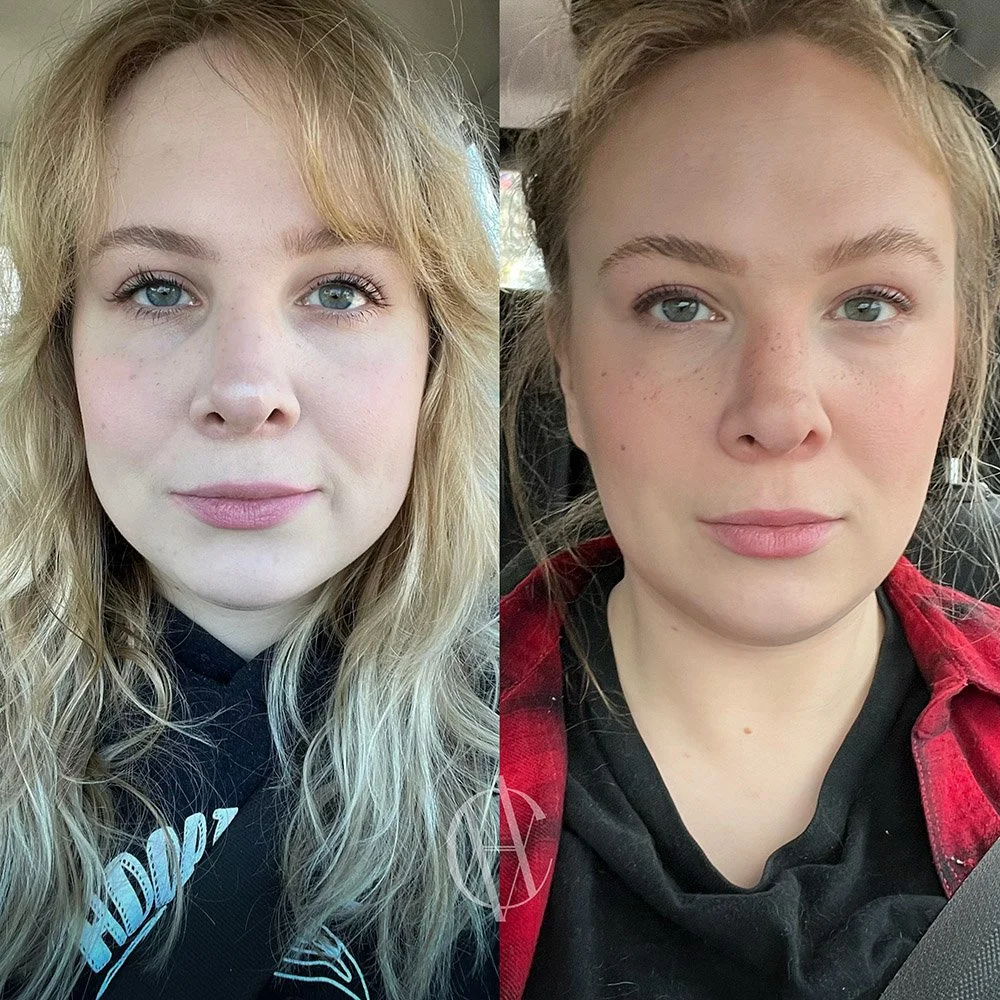
"Thank you for helping me with my TMJ and simultaneously snatching my jawline."
Dr. Dave Christianson
Only
CPT 64616
Near Milwaukee
What Is TMJ Botox? How It Works & What It Treats
TMJ disorder — temporomandibular joint disorder — describes pain and dysfunction in the jaw joint and the muscles surrounding it. For a large share of patients, the driving force isn't the joint itself. It's chronic overuse of the masseter, the powerful chewing muscle that clenches and grinds, often for hours a night, without you ever being aware of it.
Botox for TMJ addresses that muscular component directly. Neurotoxin injected into the masseter reduces how forcefully it can contract — so the clenching and grinding lose their power. Less force means less strain on the joint, less muscle soreness, and fewer of the tension headaches that come with it.
Here's the honest boundary: this treats muscle, not joint structure. If your TMJ pain stems from disc displacement, arthritis, or a bite alignment problem, Botox can reduce the muscular strain layered on top of it — but it isn't addressing the underlying structural issue, and we'll tell you that plainly rather than overselling what it can do.
Botulinum toxin is FDA-approved for several therapeutic conditions including chronic migraine and cervical dystonia. Its use for TMJ disorder is off-label — meaning it's an established clinical application supported by substantial published evidence, but not a specific FDA-labelled indication. Off-label prescribing is common and legal throughout medicine, and we'd rather state it plainly than let you find out elsewhere.
Muscular TMJ Symptoms
Structural & Dental Causes
TMJ Botox is not a replacement for dental care. If you have a night guard, keep wearing it — the two work well together, and many patients find their guard finally lasts because there's far less force wearing it down. If you haven't had a dental evaluation, get one; ruling out structural and occlusal causes matters, and documentation from your dentist also strengthens any insurance claim you decide to pursue. We're treating one contributing factor well, not claiming to treat everything.
Will TMJ Botox Change My Face? The Honest Answer
"Possibly — and how much depends on your dose, your muscle, and how many rounds you've had. Some patients want that change. Others don't. Both are valid, and it's worth telling us which you are."
Here's why the answer isn't a clean yes or no: TMJ relief and jaw slimming come from the same mechanism. Relaxing the masseter is what reduces clenching force, and a masseter that spends months contracting less will gradually reduce in size. You cannot fully separate the two effects, because they're the same effect measured differently.
What we can control is degree. TMJ dosing is often more conservative than dosing for cosmetic jaw slimming — enough to meaningfully cut clenching force, without pushing for maximum muscle reduction. At those doses any facial change is usually subtle, gradual, and shows up over multiple rounds rather than after one.
Most patients never notice it in the mirror day to day. Where it tends to become visible is in photos, or when someone comments that you look different without being able to say why.
Relief and a Softer Jawline
Plenty of patients arrive for pain and are quietly hoping for the jawline change too — and there's no reason you can't have both from one treatment. Say so at your assessment and we'll dose toward the fuller end of the therapeutic range, which produces more visible narrowing over the second and third rounds.
This is the most common outcome on this page, and it's what our patient meant by "helping me with my TMJ and simultaneously snatching my jawline." See our masseter Botox page for the full picture on slimming timelines and results.
Keeping Your Face Shape
If your jaw shape is something you like — particularly if you have a strong, square, or defined jawline you don't want softened — tell us before we dose. We can weight treatment conservatively: enough units to break the clenching cycle, held back from the range that drives noticeable muscle reduction.
We can't promise zero change, because the mechanism doesn't allow it. What we can promise is that we won't chase slimming you didn't ask for, and we'll reassess with you at each round rather than escalating the dose by default.
It Reverses If You Stop
Any facial change from TMJ Botox is temporary. The masseter is muscle — if you stop treating, it regains strength and rebuilds over time, particularly once clenching returns. Nothing here is permanent, which is genuinely reassuring compared with most treatments that alter facial contour.
It's also worth naming the opposite concern honestly: for patients with reduced skin elasticity or existing volume loss, aggressive masseter reduction can occasionally leave the overlying tissue with less support. It's uncommon, it's concentrated in a specific group, and it's a reason we assess your full facial anatomy — not just the jaw — before choosing a dose.
TMJ Botox Before & After What Relief Actually Looks Like
You can't photograph a morning without jaw pain. TMJ results are mostly felt rather than seen — so the most meaningful evidence here is what patients tell us, not what a camera captures.
First morning in two years without jaw pain.
Pain ReliefI stopped cracking my third night guard.
Grinding ReducedMy tension headaches went from daily to almost never.
Headache Relief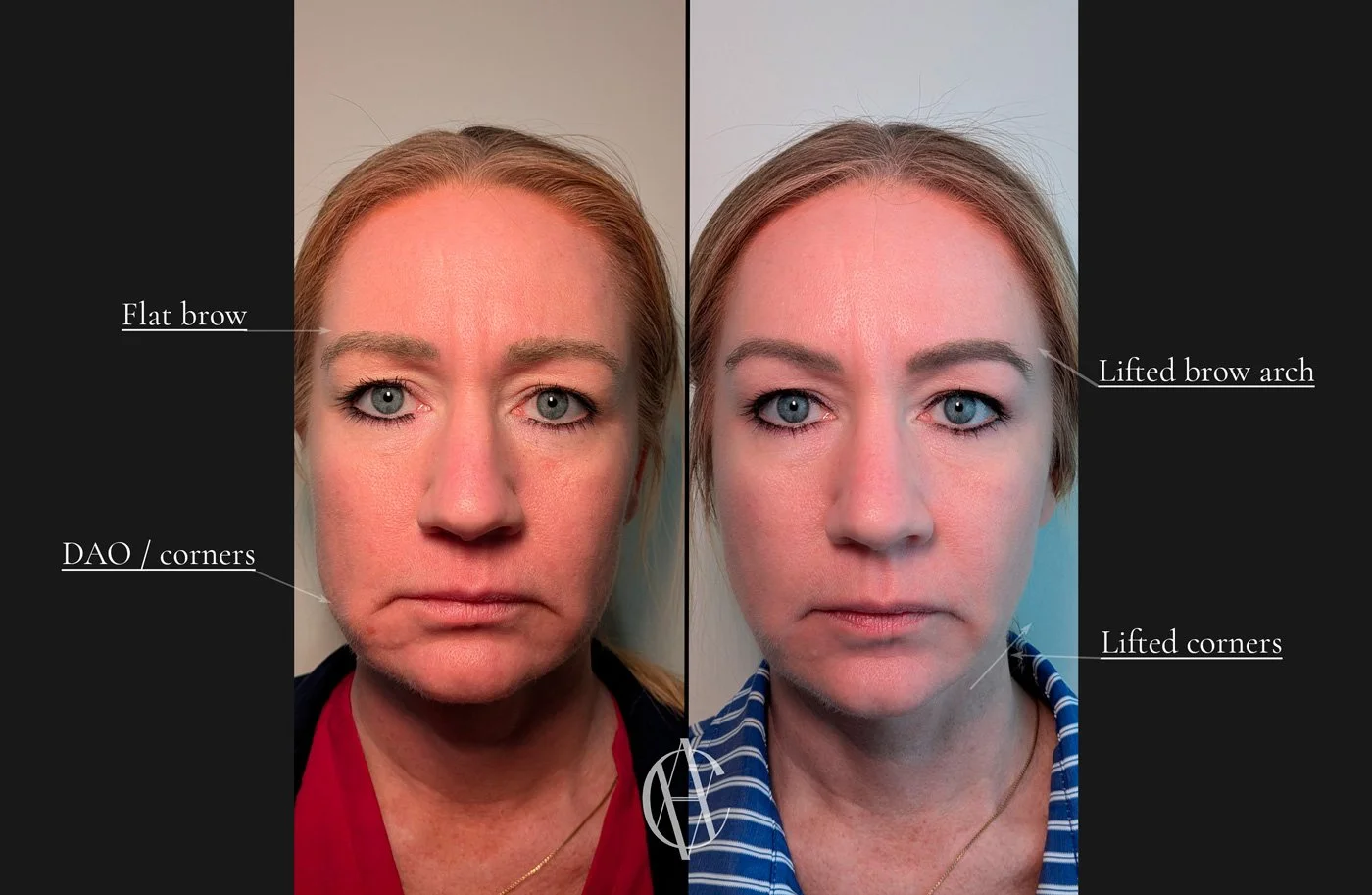
A Face That Isn't Holding Tension
When the jaw stops working overtime, the whole lower face reads differently. What patients most often notice: a softer jawline, a more relaxed chin, and mouth corners that sit level rather than pulled down.
None of that was the goal of treatment — it's what happens when chronic muscular tension is finally released. People frequently say they look less tired, which is a fair description of what stopping a nightly clenching habit does for a face.
Individual results vary — and relief is more predictable than any visible change. Most patients notice meaningful reduction in grinding, clenching, and jaw soreness within 2–4 weeks. Facial changes are gradual, dose-dependent, and build across multiple rounds. If your TMJ pain has a structural cause rather than a muscular one, results will be more limited — which is exactly what your assessment is for. No photo on this page has been retouched or filtered.
What Patients Say Google Reviews — A-Class Aesthetics
Medically Supervised TMJ Treatment At A-Class Aesthetics, New Berlin
Most people associate TMJ with the dentist's chair — so it's a fair question whether a med spa is the right place to treat it. The answer comes down to who performs the treatment and who oversees it.
Every therapeutic injectable treatment at A-Class Aesthetics is performed under the medical oversight of Dr. Dave Christianson, our Medical Director. That means your treatment operates within a physician-supervised medical framework — with proper medical history review, FDA-approved products sourced directly from manufacturers, and a physician available for consultation on complex or therapeutic cases like TMJ.
Registered Nurses Only
Every injection is performed by Natasa or Christy — both Registered Nurses. In Wisconsin, RNs are qualified to perform therapeutic injectable treatments under physician supervision, which is precisely the structure in place here.
A Medical Spa, Not a Salon
A-Class is a medical spa — medical history review, documented treatment records, manufacturer-sourced products, and clinical protocols. The distinction matters more for therapeutic treatment than it does for cosmetic work.
Documentation That Travels
Treatment performed under medical oversight comes with proper documentation — which matters if you decide to pursue insurance reimbursement, or want records to share with your dentist or physician.


Natasa & Christy, Registered Nurses
Both perform therapeutic masseter and TMJ treatment regularly — palpating the muscle, mapping each side independently, and dosing to your anatomy rather than a protocol. Together with physician oversight, that's the same standard of care you'd expect in a clinical medical setting.
TMJ Botox Cost & Insurance What It Costs and What May Be Covered
TMJ treatment is priced per unit, with both sides treated in the same appointment. Your injector palpates the muscle, determines the count, and gives you the total before anything is placed.
Unit count depends on muscle size and clenching strength — men typically require higher counts. Retreatment is every 3–4 months with Botox or Dysport, or 5–6 months with Daxxify, which is one reason we often prefer Daxxify for a condition you're managing long-term.
Will Insurance Cover Botox for TMJ? Sometimes — Here's Exactly How to Find Out
For cosmetic jaw slimming, no. For documented TMJ disorder or bruxism, some PPO plans do cover it — typically when there's a formal diagnosis and a record showing conservative treatments didn't resolve the problem.
Coverage is genuinely plan-specific, so the only reliable answer comes from calling your own insurer. Here's the code to give them:
Insurers want a formal TMJ disorder or bruxism diagnosis from a dentist or physician — not a self-report. If you've been treated for it before, those records already exist. If not, a dental evaluation is the place to start, and it's worth doing regardless since it rules out structural causes.
Most plans require evidence that conservative treatment was tried first — a night guard, physical therapy, muscle relaxants, bite adjustment. Records showing these were attempted without adequate relief are usually the deciding factor in whether a claim is approved.
Ask them directly — and use the code, because a general question about "Botox" will almost always get a no:
If your plan requires it, this has to happen before treatment. Reimbursement is rarely approved retroactively, and this is the single most common reason otherwise-valid claims get denied. Your prescribing dentist or physician typically initiates the request.
A-Class does not bill insurance directly. You pay at the time of treatment, and we provide a superbill — an itemized receipt with CPT code, units administered, and treatment details — which you submit to your insurer for reimbursement.
Blue Cross Blue Shield and Cigna are among the carriers that may cover therapeutic neurotoxin for TMJ — but coverage varies enormously between individual plans, even within the same carrier. Verify against your own policy rather than assuming, and get the answer in writing or note the reference number for the call. If your plan doesn't cover it, an HSA or FSA may still apply — worth asking your plan administrator.
Dysport treatments earn Aspire Rewards points toward savings on future appointments. TMJ treatment uses a relatively high unit count, so points accumulate faster here than on most facial areas — worth weighing if you're choosing between products. Free to join at aspirerewards.com.
Cherry offers payment plans with 0% APR options — useful for a treatment you'll be repeating a few times a year. Apply in minutes with no impact to your credit score.
Explore FinancingWant an exact quote? Your injector assesses your jaw, determines the unit count, and gives you the total before anything is placed — with no obligation to proceed.
What to Expect Before, During & After Treatment
A TMJ appointment takes about 20 minutes — most of it assessment and mapping. The injections themselves take 10–15 minutes for both sides, and there's no downtime. Most patients come on a lunch break.
Avoid blood thinners and alcohol for 48 hours. Come ready to clench and release repeatedly — that's how we map the muscle — and bring any dental documentation you have.
Palpation and mapping first, then 4–6 injection points per side. No numbing is used — the injections are deep but quick, and most patients tolerate them very well.
Stay upright for 4 hours, skip the gym today, and avoid hard or chewy foods for 24 hours. Don't rub or massage the jaw for two weeks — and keep wearing your night guard.
1–7
1–2
2–4
4–8
3–6
As the masseter weakens, many patients notice their jaw tires faster with tough foods — steak, raw carrots, chewy bread, gum. This is not a complication. It's the treatment working: the muscle genuinely has less strength available, which is precisely what stops the clenching.
It eases as you adapt, and softer foods help during that stretch. If chewing normal meals becomes genuinely difficult rather than just tiring, tell us — that suggests the dose ran high for your muscle, and we'd adjust at your next round.
Your first round is diagnostic as much as therapeutic. If your symptoms improve substantially by week 8, the muscular component was driving most of your pain — and maintenance treatment will keep it managed.
If relief is partial or minimal, that's genuinely useful information too: it points toward a structural or dental cause that needs different treatment. We'd rather tell you that than keep treating something that isn't the problem.
TMJ Botox FAQ New Berlin & Milwaukee, WI
Yes — for the muscular component of TMJ disorder, which is what drives symptoms for a large share of patients. Neurotoxin injected into the masseter reduces how forcefully it can contract, so clenching and grinding lose their power. Less force means less joint strain, less muscle soreness, and fewer tension headaches.
The honest boundary: this treats muscle, not joint structure. If your pain stems from disc displacement, arthritis, or bite misalignment, Botox can reduce the muscular strain layered on top — but it isn't addressing the underlying cause, and we'll tell you that at your assessment.
20–40 units per side is typical — so 40–80 units total, since both sides are treated in the same appointment. The count depends on your muscle size and clenching strength, and men usually require more due to greater muscle mass.
At A-Class Aesthetics that works out to $440–$880 for new patients ($11/unit with Christy, RN) or $520–$1,040 standard ($13/unit). Your injector palpates the muscle, determines the count your anatomy needs, and gives you the total before any product is placed.
Sometimes. Some PPO plans cover neurotoxin for documented TMJ disorder or bruxism — typically requiring a formal diagnosis, evidence that conservative treatment (night guard, physical therapy) didn't resolve it, and often prior authorization completed before treatment.
The billing code to reference is CPT 64616 (chemodenervation of muscle). Call your insurer and ask specifically: "Do you cover CPT 64616 for TMJ disorder or bruxism, and does it require prior authorization?" A general question about "Botox" will almost always get a no.
A-Class does not bill insurance directly — you pay at treatment and we provide a superbill to submit for reimbursement. If your plan doesn't cover it, an HSA or FSA may still apply.
Botox and Dysport last 3–4 months. Daxxify lasts 5–6 months. We often prefer Daxxify for TMJ specifically because of that longer duration — fewer appointments for something you're managing long-term — and because it spreads less, letting us target the masseter precisely.
Symptoms return gradually rather than suddenly. Many patients find that with consistent treatment they can space appointments further apart, as the chronic clenching pattern weakens over time.
Very little changes in the first week. Clenching force starts dropping in weeks 1–2, with the first noticeable relief — less morning soreness, and partners often notice less grinding noise at night.
Significant improvement typically lands at weeks 2–4, and full therapeutic effect at weeks 4–8. Week 8 is the honest measure of how much of your pain was muscular versus structural.
Possibly — and how much depends on your dose and how many rounds you've had. TMJ relief and jaw slimming come from the same mechanism: a masseter that contracts less will gradually reduce in size. You can't fully separate the two effects.
What we can control is degree. TMJ dosing is often more conservative than cosmetic jaw-slimming dosing, and at those levels any change is usually subtle and gradual across multiple rounds. If you want the slimming, say so and we'll dose toward the fuller therapeutic range. If you'd rather keep your jaw shape, tell us before we dose — we can weight it conservatively, though we can't promise zero change. Any change is also temporary and reverses if you stop treating.
Most patients tolerate it very well. No numbing cream or lidocaine is used for masseter treatment — the injections go deep into muscle rather than superficial tissue, and patients typically describe them as a firm pressure rather than a sharp pinch.
There are 4–6 injection points per side and the whole treatment takes 10–15 minutes. Mild soreness when chewing for a few days afterward is normal and expected.
Botulinum toxin is FDA-approved for several therapeutic conditions including chronic migraine and cervical dystonia. Its use for TMJ disorder is off-label — an established clinical application supported by substantial published evidence, but not a specific FDA-labelled indication.
Off-label prescribing is common and entirely legal throughout medicine. We'd rather state it plainly than have you discover it elsewhere and wonder why we didn't mention it.
No — keep wearing it. The two do different jobs: Botox reduces the force behind clenching, while a night guard provides a physical barrier protecting your teeth from contact. Together they're considerably more effective than either alone.
A frequent side benefit: patients tell us their guard finally lasts, because there's far less pressure wearing it down. If you've been cracking through guards, that's often the first thing to change.
They solve different problems, so "better" depends on what's bothering you. A night guard protects your teeth from grinding damage but doesn't reduce the clenching itself — which is why many patients still wake with a sore jaw and tension headaches while wearing one faithfully.
Botox reduces the muscular force driving the clenching, which addresses the pain, soreness, and headaches. It doesn't shield your teeth. Start with the night guard — it's cheaper, non-invasive, and standard first-line care. If you're still in pain despite wearing it, that's exactly the situation Botox is suited to, and having tried a guard first also strengthens any insurance claim.
Yes — this is one of its most reliable applications. A masseter that can't contract at full strength cannot generate the force behind grinding. Most patients report meaningful reduction within 2–4 weeks: less morning soreness, fewer tension headaches, and reduced wear on teeth and night guards.
Worth noting: you may still make the grinding motion — the treatment removes the power behind it rather than the habit itself. That's why keeping your night guard matters, and why treatment doesn't address stress-related causes on its own.
Common and expected: mild soreness when chewing for a few days, small temporary bumps at injection sites that settle within 20–30 minutes, and occasional mild bruising given the injection depth.
The one to plan for: chewing fatigue in weeks 2–6. As the muscle weakens, your jaw tires faster with tough foods — steak, raw carrots, chewy bread. This isn't a complication, it's the treatment working, and it eases as you adapt. If chewing normal meals becomes genuinely difficult rather than just tiring, tell us — that suggests the dose ran high for your muscle.
Uncommon: asymmetry or a change in smile if product reaches muscles it wasn't meant to. This comes down to injection depth and placement, and it's always temporary.
No — and that's worth knowing before you book. It works well when your symptoms are driven by muscular overuse: clenching, grinding, and the pain that follows. It works far less well when the primary cause is structural — disc displacement, joint degeneration, arthritis, or bite misalignment.
Your first round is genuinely diagnostic. If symptoms improve substantially by week 8, the muscular component was driving most of your pain. If relief is minimal, that points toward a structural cause needing different treatment — and we'd rather tell you that than keep treating something that isn't the problem.
All therapeutic injectable treatments are performed by Registered Nurses — Natasa (Founder & RN) or Christy (Lead RN) — under the medical oversight of Dr. Dave Christianson, Medical Director.
A-Class Aesthetics is a medical spa, not a beauty salon. That structure means medical history review, FDA-approved products sourced directly from manufacturers, documented treatment records, and a physician available for consultation on therapeutic cases. We're located at 15155 W National Ave in New Berlin, WI — minutes from Milwaukee, Brookfield, and Waukesha.
Natasa and Christy are happy to talk through your symptoms before you book.
Call (414) 265-6586 — no consultation fee, no obligation to proceed.
TMJ Botox Near You Serving SE Wisconsin
A-Class Aesthetics is located at 15155 W National Ave in New Berlin, WI — directly across from the New Berlin Public Library. We're a short drive from Milwaukee, Waukesha, Brookfield, Pewaukee, Menomonee Falls, Elm Grove, Greenfield, and West Allis. Whether you're searching for Botox for TMJ near Milwaukee, TMJ treatment in Waukesha, or jaw pain relief in Brookfield, our New Berlin location is easily accessible from across SE Wisconsin — with free parking and appointments that fit a lunch break.
New Berlin, WI 53151
Wake Up Without a Sore Jaw Relief Usually Arrives in 2–4 Weeks
Performed by Registered Nurses under the medical oversight of Dr. Dave Christianson. Superbill provided for insurance reimbursement. Minutes from Milwaukee, Waukesha, and Brookfield.