
Botox for Underarm Sweating in New Berlin, WI Hyperhidrosis Relief That Lasts Months
Hyperhidrosis is excessive sweating well beyond what your body needs to regulate temperature — and no amount of clinical-strength antiperspirant reliably fixes it. Neurotoxin injected just beneath the skin of the underarm blocks the nerve signal that tells sweat glands to activate, typically reducing underarm sweating by a dramatic margin for four to six months at a time. Performed by our RN injectors under the medical oversight of Dr. Dave Christianson, Medical Director, in New Berlin — minutes from Milwaukee, Brookfield, and Waukesha.
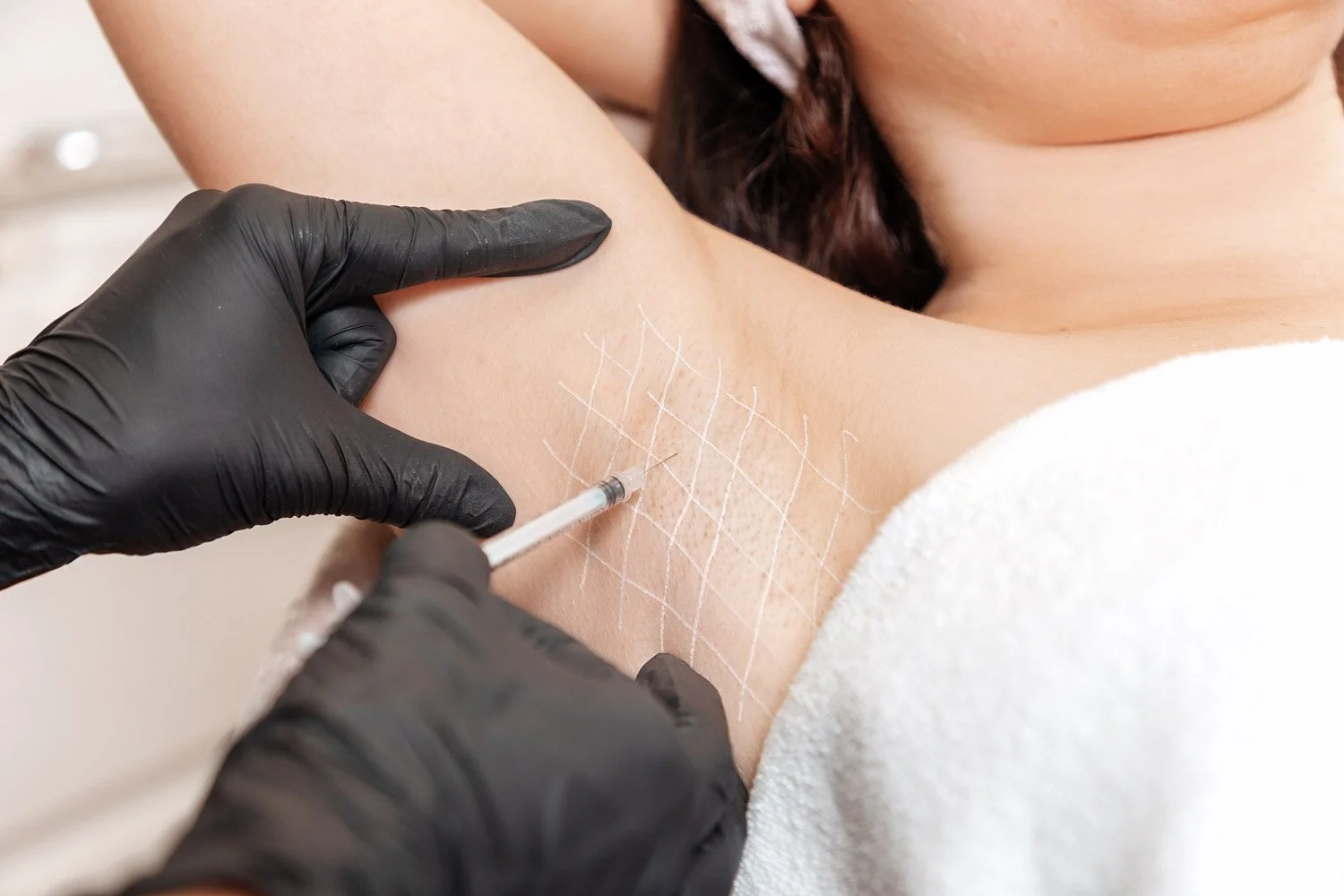
Underarm Botox for hyperhidrosis at A-Class Aesthetics Med Spa, New Berlin, WI. Treatment covers both underarms in a single appointment.
Dr. Dave Christianson
For This Use
CPT 64650
Near Milwaukee
What Is Hyperhidrosis? And Why Antiperspirant Isn't Enough
Hyperhidrosis is sweating far beyond what your body needs to cool itself. It isn't about being out of shape, anxious, or running warm — the sweat glands are simply receiving an overactive signal, and they respond exactly as instructed.
It affects an estimated 3% of people, usually starts in adolescence or early adulthood, and tends to be symmetrical — both underarms, both palms, both feet. Most people who have it have quietly managed around it for years.
Antiperspirants work by physically plugging the sweat duct at the skin's surface. They're fighting the output. Neurotoxin works further upstream — it interrupts the signal telling the gland to produce sweat in the first place, which is why it succeeds where clinical-strength products have failed.
This is an FDA-approved use. Botox is specifically approved for severe underarm hyperhidrosis — not off-label.
No — your body can still cool itself. You have two to four million sweat glands, and the underarms account for a very small fraction of them. Treating that area doesn't impair thermoregulation; your body simply manages heat through the enormous remaining surface area, as it already does. You won't overheat, and most patients don't notice any increase elsewhere.
Primary Focal Hyperhidrosis
The common form, and the one this treatment is designed for. There's no underlying medical cause — the nerve signalling to your sweat glands is simply overactive.
Secondary Hyperhidrosis
Excessive sweating caused by something else — a medication, hormonal change, thyroid condition, infection, or another underlying issue. Treating the symptom without identifying the cause isn't the right first step.
You don't need a formal diagnosis to be bothered by this. Plenty of patients wouldn't meet a strict clinical threshold for severe hyperhidrosis but still plan their wardrobe around sweat marks and keep a spare shirt at work. That's reason enough.
That said, if you're hoping to pursue insurance reimbursement, a documented diagnosis and a record of antiperspirants that didn't work will matter considerably — and it's worth having that conversation with your physician before you book. We cover exactly how that process works further down this page.
What to Expect Before, During & After Treatment
Your appointment is booked for 30 minutes. Two preparation steps genuinely matter for this treatment, and getting them right makes the whole appointment easier.
Shave the night before, arrive without deodorant, and skip blood thinners and alcohol for 48 hours. Wear something you can easily lift your arms in.
Each underarm is mapped into a grid, then treated with many shallow injections just under the skin — about 50 units per side. The needle is very fine and the injections are superficial. Topical numbing available on request.
Skip deodorant and shaving for 24 hours, avoid heat and heavy exercise today, and don't rub the area. Everything else carries on as normal.
1–2
3–7
2
1–4
4–6
Usually not to any degree you'd notice. Compensatory sweating is a well-documented concern with surgical treatment for hyperhidrosis — where nerves are permanently cut — but it's far less common and far milder with neurotoxin, because you're treating a small area temporarily rather than severing a signal permanently.
Some patients report slightly more sweating elsewhere; most report none at all. And because the effect wears off, nothing here is a permanent commitment — which is a meaningful difference from the surgical option.
A practical side effect worth mentioning: less sweat means noticeably less odour, since body odour comes from bacteria breaking down sweat rather than from sweat itself. Many patients find they switch from clinical antiperspirant to ordinary deodorant — or skip it altogether.
The other thing people mention is subtler: they stop checking. No more raising an arm carefully, no more choosing shirts by how well they hide marks. That habit takes a few weeks to unlearn.
Underarm Botox Cost & Insurance What It Costs — and What May Be Covered
Hyperhidrosis treatment uses 50 units per underarm — 100 units total, with both sides treated in the same appointment. It's the highest unit count of any treatment we offer, and the price reflects that honestly.
First treatment with Christy, RN
Either injector, all patients
That's a real number, so here's the honest context. Treatment lasts 4–6 months, which works out to roughly $200–$275 per month of relief — and most patients treat twice a year rather than continuously.
Worth weighing against what hyperhidrosis already costs you: replacement shirts, dry cleaning, clinical antiperspirants, and undershirts add up quietly year after year, and none of them solve the problem. Many patients also find this is the treatment their insurance is most likely to cover — which is covered in detail below.
Does Insurance Cover Botox for Sweating? More Often Than You'd Expect
This is the strongest insurance case of any treatment we offer — because unlike most therapeutic neurotoxin uses, severe underarm hyperhidrosis is an FDA-approved indication. You aren't asking your insurer to cover an off-label use; you're asking them to cover a treatment the FDA specifically approved for this condition.
Many PPO plans do cover it when there's a documented diagnosis and evidence that prescription antiperspirants didn't work. Coverage still varies by plan, so verify against your own policy — here's the code to give them:
Insurers want a formal primary axillary hyperhidrosis diagnosis from a physician or dermatologist — not a self-report. If you've raised it with a doctor before, those notes may already exist. If not, this is the place to start, and it also rules out a secondary cause worth knowing about.
Nearly every plan requires evidence that prescription-strength topical treatment was tried first — typically aluminium chloride products like Drysol. A record showing you used one and it didn't adequately control your symptoms is usually the deciding factor. If you've only used over-the-counter products, ask your physician about a prescription trial before pursuing coverage.
Use the code — a general question about "Botox" will almost always be denied:
If your plan requires it, this has to be finished before treatment. Reimbursement is rarely approved retroactively, and this is the single most common reason otherwise-valid claims are denied. Your prescribing physician typically initiates the request.
A-Class does not bill insurance directly. You pay at the time of treatment and we provide a superbill — an itemized receipt with CPT code, units administered, and treatment details — which you submit to your insurer for reimbursement.
Blue Cross Blue Shield, Cigna, Aetna, and UnitedHealthcare all have plans that cover hyperhidrosis treatment under the right circumstances — though coverage varies enormously between individual policies within the same carrier. Verify against your own plan and note the reference number for the call. If coverage is denied, an HSA or FSA generally applies to this treatment since it addresses a diagnosed medical condition — worth confirming with your plan administrator, as it effectively discounts the cost by your tax rate.
Cherry offers payment plans with 0% APR options — genuinely useful for this treatment, since it's a larger single cost that covers four to six months. Spreading it across the period it actually lasts makes the math considerably easier. Apply in minutes with no impact to your credit score.
Explore FinancingDysport treatments earn Aspire Rewards points toward savings on future appointments. At 100 units, hyperhidrosis treatment accumulates points faster than anything else we do — meaningfully so if you treat twice a year. Free to join at aspirerewards.com before your appointment.
Pursuing insurance? Sort out your diagnosis and prior authorization first — we'll provide the superbill afterward. Not going that route? Book whenever you're ready.
This Is a Medical Condition And It's Treated Like One Here
Hyperhidrosis gets treated as a personal failing far more often than as what it actually is — a recognized medical condition with an FDA-approved treatment. How and where you're treated should reflect that.

Every therapeutic injectable treatment at A-Class Aesthetics is performed under the medical oversight of Dr. Dave Christianson, our Medical Director. For hyperhidrosis that means your treatment operates inside a physician-supervised framework — proper medical history review, FDA-approved product sourced directly from the manufacturer, documented treatment records, and a physician available for consultation on therapeutic cases.
An Approved Indication
Severe underarm hyperhidrosis is an FDA-approved use for Botox — not off-label. That distinction matters clinically, and it matters again when you're speaking to an insurer about coverage.
Registered Nurses Only
Every injection is performed by Natasa or Christy — both Registered Nurses. In Wisconsin, RNs are qualified to perform therapeutic injectable treatments under physician supervision, which is precisely the structure in place here.
Records That Support a Claim
Treatment under medical oversight comes with proper documentation — the itemized superbill with CPT 64650, units administered, and treatment detail that your insurer will want if you're pursuing reimbursement.


Natasa & Christy, Registered Nurses
Both perform hyperhidrosis treatment regularly — mapping each underarm into a grid and distributing product evenly so no area is left untreated. Even coverage is the whole game here, and it's the difference between comprehensive relief and a patch that still sweats.
Underarm Botox FAQ New Berlin & Milwaukee, WI
Yes — dramatically, for most patients. Neurotoxin blocks acetylcholine, the chemical messenger that tells sweat glands to activate. The glands themselves are unharmed; they simply stop receiving the instruction.
This is why it works where antiperspirants haven't. Antiperspirants physically plug the duct at the skin's surface — they fight the output. Neurotoxin interrupts the signal upstream. Most patients notice a substantial drop within 3–7 days, with full effect at two weeks.
Treatment uses 100 units total — 50 per underarm. That's $1,100 for new patients ($11/unit with Christy, RN) or $1,300 standard ($13/unit with either injector). Both sides are treated in the same appointment.
Since relief lasts 4–6 months, that works out to roughly $200–$275 per month, and most patients treat twice a year. It's also the treatment most likely to be covered by insurance — and HSA and FSA funds generally apply since it addresses a diagnosed medical condition.
Often, yes — this has the strongest insurance case of any treatment we offer, because severe underarm hyperhidrosis is an FDA-approved indication. You aren't asking your insurer to cover an off-label use.
Most plans require a documented diagnosis plus evidence that prescription-strength antiperspirant (typically aluminium chloride, like Drysol) didn't adequately control it. The billing code is CPT 64650. Ask your insurer directly: "Do you cover CPT 64650, chemodenervation of eccrine glands, for primary axillary hyperhidrosis, and does it require prior authorization?"
A-Class doesn't bill insurance directly — you pay at treatment and we provide a superbill to submit for reimbursement. Complete any prior authorization before your appointment.
4–6 months — noticeably longer than facial treatments, which typically run 3–4. Sweat glands regain function more slowly than muscle does.
Sweating returns gradually rather than all at once, so you'll notice it creeping back before it's fully returned. Most patients treat twice a year, and many time it seasonally — late spring so relief covers summer, then again in autumn.
Nothing changes in the first day or two. Most patients notice a marked drop in sweating between days 3 and 7, with full effect around two weeks.
If any area was missed, two weeks is when we'd see it and touch it up. Book 2–3 weeks before an event, holiday, or the start of a season you want covered.
Usually not to any degree you'd notice. Compensatory sweating is a well-documented concern with surgical treatment for hyperhidrosis, where nerves are permanently cut — but it's far less common and far milder with neurotoxin, because you're treating a small area temporarily rather than severing a signal for good.
Some patients report slightly more sweating elsewhere; most report none. And since the effect wears off, nothing here is a permanent commitment — a meaningful difference from the surgical option.
Yes. You have two to four million sweat glands, and the underarms represent a very small fraction of them. Treating that area doesn't impair thermoregulation — your body manages heat through the enormous remaining surface area, exactly as it already does.
You won't overheat, and you can exercise normally. We just ask you to skip heavy workouts and heat on the day of treatment itself so the product settles where it was placed.
It's more injection points than any other treatment we do, but each one is very shallow — just beneath the skin rather than deep into muscle — so most patients describe it as a series of small pinches rather than anything sharp.
Topical numbing is available on request. If you'd rather be numbed, just ask. Shaving the night before rather than the morning of also makes a genuine difference, since freshly shaved skin is more sensitive.
50 units per underarm — 100 units total. That's the highest unit count of any treatment we perform, which is why the cost sits above our facial treatments.
The units are distributed across a grid of many small injection points rather than concentrated in a few spots. Even coverage is what determines the result — it's the difference between comprehensive relief and a patch that still sweats.
Yes. Botox is specifically FDA-approved for severe primary axillary hyperhidrosis — excessive underarm sweating. This is an on-label use, not off-label.
That distinction matters twice: clinically, and again when you're speaking to an insurer about coverage. It's one of the reasons this treatment is more likely to be reimbursed than most therapeutic neurotoxin applications.
Yes — shave both underarms the night before, not the morning of. Freshly shaved skin is irritated and noticeably more sensitive to injections. Twelve hours of recovery makes a real difference in comfort.
Also come without deodorant or antiperspirant on the day. Product residue interferes with cleaning and mapping the treatment area.
After 24 hours. The injection points need that time to close. Hold off on shaving for 24–48 hours as well, and skip heat and heavy workouts on the day of treatment.
Many patients find they need far less of it afterward. Less sweat means noticeably less odour — body odour comes from bacteria breaking down sweat rather than from sweat itself — so plenty of people switch from clinical antiperspirant to ordinary deodorant, or skip it entirely.
Common and expected: small bumps at each injection point that settle within 20–30 minutes, brief redness or tenderness for a day, and occasional small bruises at injection sites — the most likely of the three given the number of points.
Uncommon: an area that still sweats because coverage was uneven, which is why even distribution matters and why we assess at two weeks. Everything is temporary — neurotoxin wears off by nature, so nothing here is a permanent outcome.
All therapeutic injectable treatments are performed by Registered Nurses — Natasa (Founder & RN) or Christy (Lead RN) — under the medical oversight of Dr. Dave Christianson, Medical Director.
A-Class Aesthetics is located at 15155 W National Ave in New Berlin, WI — about 8 minutes from Brookfield, 12 from Waukesha, and 22 from Milwaukee. We serve patients from across SE Wisconsin including Pewaukee, Elm Grove, Greenfield, West Allis, Wauwatosa, and Menomonee Falls.
What Patients Say Google Reviews — A-Class Aesthetics
Natasa and Christy are happy to talk it through — including the insurance side.
Call (414) 265-6586. No consultation fee, no obligation to proceed.
Hyperhidrosis Treatment Near You Serving SE Wisconsin
A-Class Aesthetics is located at 15155 W National Ave in New Berlin, WI — directly across from the New Berlin Public Library. We're a short drive from Milwaukee, Waukesha, Brookfield, Pewaukee, Menomonee Falls, Elm Grove, Greenfield, and West Allis. Whether you're searching for Botox for sweating near Milwaukee, hyperhidrosis treatment in Waukesha, or underarm Botox in Brookfield, our New Berlin location is easily accessible from across SE Wisconsin — with free parking and an appointment that fits a lunch break.
New Berlin, WI 53151
Stop Planning Around It Relief in Under a Week, Lasting Months
An FDA-approved treatment for a real medical condition — performed by Registered Nurses under the medical oversight of Dr. Dave Christianson. Superbill provided for insurance reimbursement. Minutes from Milwaukee, Waukesha, and Brookfield.